


Every spring, our crew starts seeing the same thing across Northwest Arkansas: trees that made it through winter with problems nobody noticed yet. A crack that developed during an ice storm. A limb that’s been slowly dying since last summer. Root damage that a hard freeze finished off. These issues don’t announce themselves — they wait until a spring thunderstorm or a hot summer day with no wind to make themselves known in the worst possible way.
Spring is the single best time of year to get ahead of your trees. The weather is cooperative, the ground is accessible, and the growing season ahead gives healthy trees the best chance to recover from any maintenance work. What you do — or don’t do — in March and April sets the tone for your property’s safety for the next twelve months.
We put together this checklist based on what we actually see and address for homeowners across Northwest Arkansas every spring. It’s practical, it’s honest, and it covers the things that matter most.
Key Takeaways
- Winter damage is often hidden — spring is when it becomes visible and addressable
- Dead and weak branches are the top hazard to address before spring storm season
- Northwest Arkansas tree species have specific spring care needs worth understanding
- Early spring is the ideal window for most pruning and structural work
- Some spring tasks are DIY-friendly; others genuinely require professional equipment and expertise
- Catching problems in spring costs significantly less than emergency response in summer
Start With a Full Property Walk
Before anything else, walk your entire property with fresh eyes and a specific purpose. This isn’t a casual stroll — it’s a deliberate inspection. Give yourself time to look at each tree from multiple angles, including standing back far enough to see the full canopy and crown structure.
We recommend doing this walk twice: once right after the last frost when trees are still dormant or just budding, and again about four to six weeks into spring when foliage is filling in. The first walk is best for spotting structural issues — cracks, splits, lean, and dead wood are all much easier to see without leaves in the way. The second walk is better for catching health issues — patchy growth, discoloration, and sparse areas in the canopy that indicate problems beneath the surface.
When you walk, you’re looking for anything that looks different from what you’d expect. A branch that has no buds when everything around it is leafing out. A crack in the trunk that wasn’t there last fall. A section of bark that’s peeling in an unusual way. Mushrooms or fungal growth at the base of the tree. Soil that’s heaved or cracked around the root zone. These are the details that turn into problems by July if you don’t catch them now.
Inspect for Winter Damage
Northwest Arkansas winters are unpredictable. We can go from a mild January to a significant ice storm in February with very little warning, and that cycle of freezing and thawing takes a real toll on trees. The damage isn’t always obvious immediately — sometimes it takes the stress of the growing season to reveal what winter actually did.
Ice storms are the most destructive winter event for trees in this region. The weight of ice accumulation can cause branch failures that crack rather than break cleanly, leaving jagged wounds and compromised structural connections. Even branches that didn’t fully break may have developed cracks at the attachment point that will fail later in the year. We look for these split or partially attached branches on every spring assessment.
Bark damage is another winter issue to check. Frost cracks — vertical cracks in the trunk caused by rapid temperature changes — are common on thin-barked species like maples and ornamental cherries. Sunscald, where the bark on the south or southwest side of the trunk gets damaged by winter sun followed by freezing temperatures, is also worth looking for. These wounds won’t kill most established trees, but they create entry points for disease and insects that compound over time without treatment.
Spring Pruning Priorities
| Pruning Task | Best Timing | DIY Friendly? | Notes |
|---|---|---|---|
| Dead branch removal | Early spring, before leaf-out | Small branches only | Anything over head height needs professional equipment |
| Winter damage cleanup | As soon as damage is identified | Minor cuts only | Improper cuts on large branches cause long-term damage |
| Crown cleaning | Late winter through early spring | No | Requires knowledge of tree structure to do correctly |
| Structural pruning (young trees) | Early spring | With guidance | Good investment to establish strong form early |
| Oak pruning | Avoid Feb–June in NWA | No | Oak wilt risk is highest during this window |
| Fruit tree pruning | Before bud break | Yes for light work | Timing is critical for production and health |
Pruning in early spring — before full leaf-out — is ideal for most tree work because trees are still dormant or just waking up. Cuts made during this window heal faster as the growing season begins, and the reduced foliage makes it easier to see the full structure and make accurate decisions about what needs to come out.
The priority list for spring pruning starts with anything dead, damaged, or structurally compromised. Dead branches don’t improve with time — they get heavier, more brittle, and more likely to drop without warning. We remove these early in the season before they become a storm-season hazard. Winter-damaged wood with jagged or split ends needs to be cut back to healthy wood to prevent disease entry and encourage proper callous formation.
One important note specific to Northwest Arkansas: if you have oak trees, be careful about pruning timing. Oak wilt is present in this region, and the disease spreads most aggressively through fresh pruning wounds during February through June when the sap-feeding beetles that carry it are most active. If your oaks need structural work, get it done in late fall or winter, or wait until midsummer. This is one of the cases where timing genuinely matters for tree health.
Check Your High-Risk Trees First
Not all trees need equal attention, and spring is the time to prioritize the ones that matter most. We evaluate risk based on two factors: the likelihood of failure and the consequences if it does fail. A tree that’s showing stress signals directly over your house, driveway, or a frequently used area gets assessed before a tree of similar condition in an open area of the yard.
Silver maples are one of the most common high-risk trees we deal with in Northwest Arkansas. They grow fast, which is why people plant them, but that rapid growth produces weak wood and poor branch structure that fails regularly in storms. If you have mature silver maples — especially ones with multiple large co-dominant trunks — they deserve a close look every spring. Branch removal and structural cabling can extend their life and reduce risk significantly.
Bradford pears are another species we see frequently and address regularly. They have a characteristic growth pattern where multiple large branches originate from nearly the same point on the trunk, creating weak attachment angles that split apart as the tree matures. Most Bradford pears in Northwest Arkansas are approaching the age range where this failure becomes common. Spring is a good time to assess whether structural intervention is still possible or whether the tree is a candidate for removal before it fails on its own terms.
Older hardwoods — oaks, hickories, and large elms — deserve attention for internal decay that isn’t always visible from outside. Signs worth looking for include large dead sections in the crown, cavities in the trunk, unusual fungal growth at the base, or a history of large branch failures. These trees are worth a professional evaluation if you have any uncertainty, because the consequences of a large hardwood failing near a structure are significant.
Address Stump and Root Zone Issues
Spring is a good time to deal with stumps from trees removed in the fall or winter. Stumps left in place attract certain wood-boring insects and fungal species that can spread to living trees in the area. If you have stumps from recent removals, spring grinding gets ahead of these issues and opens up the space for new landscaping before summer.
Root zone health is something most homeowners don’t think about until there’s a visible problem, but spring gives you the best opportunity to assess it. Walk around the base of significant trees and look for soil that’s compacted, waterlogged, or that has visible erosion. Look for any construction activity or soil disturbance near major trees from the previous year — root damage from trenching, grading, or heavy equipment often doesn’t show up in the canopy until one or two growing seasons later.
If you’re planning any spring construction, landscaping, or underground utility work near established trees, this is the time to plan for root protection before the work begins rather than after. We’ve seen a lot of preventable tree loss from construction damage that could have been avoided with some advance planning and a quick conversation.
Spring Mulching for Tree Health
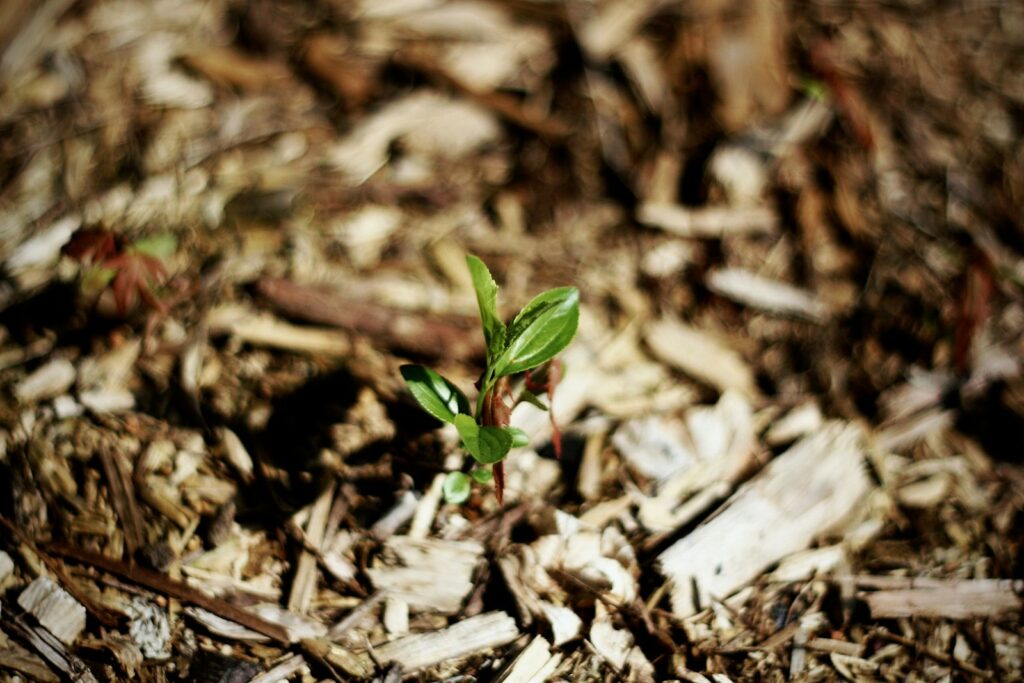
One of the highest-return, lowest-effort things you can do for your trees in spring is refresh the mulch around their base. A 3-4 inch layer of organic mulch in a ring around each tree — starting a few inches away from the trunk, not piled against it — does several things simultaneously. It retains soil moisture through the hot NWA summers, moderates soil temperature, reduces competition from grass and weeds, and gradually improves soil quality as it breaks down.
We see a lot of what’s called “mulch volcanoes” — mulch piled high against the trunk — and it’s worth mentioning that this actually harms trees rather than helping them. Mulch against the bark traps moisture and creates conditions for rot and disease at the base of the trunk. Keep mulch pulled back a few inches from the trunk, spread wide rather than piled deep, and you’ll get the full benefit without the risk.
Spring mulch application is straightforward enough that most homeowners handle it themselves. The main thing is using quality organic mulch — wood chips, shredded bark, or similar material — rather than dyed or treated products that offer less benefit and can sometimes introduce issues.
Know When to Call Professionals
We’re always straightforward about this: some spring tree work is genuinely DIY-friendly, and some isn’t. You can refresh mulch, remove small dead branches within reach from the ground, and clear light debris from around tree bases. These tasks are safe and appropriate for most homeowners.
However, anything that involves working at height, operating a chainsaw on significant wood, or making decisions about the structural integrity of a major tree requires professional equipment and expertise. The risk isn’t just personal injury — improper cuts on large branches can create wounds that permanently compromise tree health. A split that gets cut back incorrectly will seal poorly and become a chronic disease entry point. Getting it right matters as much as getting it done.
We also want to flag one specific scenario: if you see a tree that you’re genuinely uncertain about — one that might be hazardous but you’re not sure — don’t ignore it waiting for clarity. Call for a professional assessment. We provide free estimates, which means there’s no cost to getting an expert opinion on whether a tree poses a real risk. The assessment takes minutes. The consequences of ignoring a genuinely hazardous tree can last much longer.
Spring Is Also the Right Time to Plan Ahead
Beyond addressing current issues, spring is a good planning window for tree work you want to do later in the year. If you’re considering removals, land clearing for a project, or significant structural work on mature trees, getting on a company’s schedule in spring gives you more flexibility than calling in late summer when everyone is busy.
We work with homeowners and property managers across Northwest Arkansas who use spring assessments to build a prioritized list of tree work for the year — what needs to happen now, what can wait until fall, and what’s worth monitoring but not acting on yet. This kind of planning approach almost always costs less than reactive, emergency-driven decisions made in the middle of storm season.
It’s also a smart time to think about new plantings. If you’re removing a tree this spring, replacing it with a species and placement that works with your property rather than against it prevents the same issues from recurring. We’re happy to talk through what species make sense for specific locations, soil conditions, and sun exposure in Northwest Arkansas.
Common Trees in Northwest Arkansas: Spring Care Notes
Oak species (Red Oak, White Oak, Cherrybark Oak): Avoid pruning February through June due to oak wilt risk. Inspect for signs of oak wilt — wilting and browning that progresses rapidly down branches — and contact a professional immediately if suspected. Otherwise, these are sturdy, low-maintenance trees that respond well to light crown cleaning in late fall or winter.
Loblolly and Shortleaf Pine: Look for tip dieback, discolored needles, or pitch tubes (small resin deposits) on the bark that indicate pine bark beetle activity. Spring is when beetle pressure begins increasing. Healthy, well-watered pines resist beetle attacks better than stressed trees.
Silver Maple: Inspect co-dominant stems and major branch unions for cracks or included bark. This species benefits from structural pruning more than almost any other common NWA tree. Don’t wait on silver maple work — small interventions now prevent large failures later.
Eastern Red Cedar: Generally low-maintenance, but spring is a good time to remove dead interior wood if the tree is in a high-visibility area. Be aware of cedar-apple rust if you have both cedar and apple or crabapple trees nearby.
Bradford/Callery Pear: Inspect branch unions carefully for splitting. Trees showing significant structural spread may be candidates for removal before they fail on their own timeline. This species has a relatively short useful life in the NWA landscape.
FAQs
When exactly is the best time for spring tree pruning in Northwest Arkansas?
The ideal window for most pruning is late February through early April, before full leaf-out. This captures the end of dormancy when cuts heal fastest as the growing season begins. The exception is oaks — avoid pruning those from February through June due to oak wilt transmission risk.
How do I know if a branch that broke in winter needs professional removal or if I can handle it myself?
If the branch is small enough to cut cleanly with a hand saw or loppers while standing on the ground, most homeowners can manage it safely. If it requires a ladder, a chainsaw, or if the branch is large enough that a drop could cause damage, call a professional. The rule of thumb: if you have any hesitation about doing it safely, that hesitation is telling you something.
Is spring fertilization good for trees?
For most established trees in good health, fertilization isn’t necessary and can sometimes cause problems by pushing excessive growth. Young trees and trees showing signs of nutrient deficiency — pale leaves, poor growth, or overall decline — can benefit from spring fertilization, but it’s worth getting a professional recommendation rather than applying fertilizer broadly. Soil conditions in Northwest Arkansas vary significantly across the region.
I have a tree that didn’t leaf out fully this spring. Is it dying?
Partial leaf-out can indicate several things: winter damage to specific branches, root stress from drought or compaction, disease, or structural damage. It doesn’t automatically mean the tree is dying, but it does mean something is wrong. Note which sections are affected and call for an assessment — catching the problem early usually means more options for addressing it.
Should I be concerned about insects in my trees in spring?
Spring is when most wood-boring insects become active, so it’s a relevant time to look for signs of infestation: small entry/exit holes in bark, sawdust-like frass at the base of the tree, or girdling at the base from insects overwintering. Most healthy trees resist insect damage well. Stressed trees — drought-stressed, recently damaged, or in decline — are significantly more vulnerable.
How far in advance should I schedule spring tree work?
For non-emergency work, we recommend reaching out in late winter or very early spring before the busy season begins. March through May is peak season for tree services in Northwest Arkansas, and scheduling fills up quickly after storm events. Reaching out in February gives you the best availability and often the most flexibility on timing.
What’s the most common spring tree mistake homeowners make?
Topping trees — cutting the main branches back to stubs in an attempt to reduce height or size. This is one of the most damaging things you can do to a tree. It destroys the natural structure, creates large wounds that rarely seal properly, and triggers a flush of weakly attached regrowth that becomes a long-term hazard. If a tree is too large for its location, talk to a professional about proper reduction techniques or removal and replacement with a more appropriate species.
Let’s Get Your Property Ready for Spring
We’re out in the field across Northwest Arkansas every day this time of year assessing winter damage and getting trees ready for the season ahead. If you’d like a professional set of eyes on your property — or if you already know you have work that needs to happen — give us a call. Free estimates, honest assessments, and a crew that shows up when we say we will.
Carlos Express Tree Service provides professional tree care throughout Northwest Arkansas, Southwest Missouri, and Northeast Oklahoma. Licensed. Insured. Bonded. Available 24/7 for emergencies.


