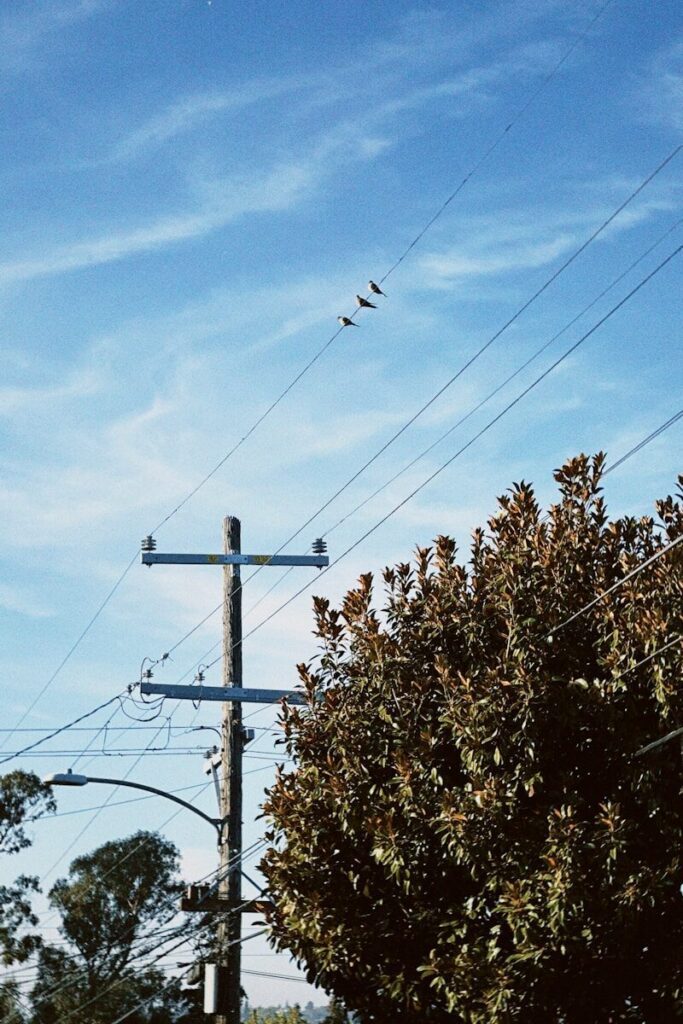
We get emergency calls throughout Northwest Arkansas about trees and power lines several times a week, and the situation is almost always the same: branches have grown into the lines over time, or a storm has pushed a tree or large limb into contact with electrical infrastructure. The person calling knows it’s dangerous but isn’t sure who to call, whether it’s their responsibility, or what needs to happen next. The anxiety in these calls is understandable — electricity and trees are a potentially lethal combination that requires immediate attention and proper handling.
Here’s what makes this situation particularly challenging: responsibility depends on location, ownership, and specific circumstances. Sometimes the utility company handles it at no cost to the property owner. Sometimes it’s entirely the property owner’s responsibility and expense. Sometimes it’s a shared situation requiring coordination between multiple parties. Understanding these distinctions helps property owners navigate what can be a confusing and urgent situation.
This guide breaks down who’s responsible for what when trees and power lines interact, how to handle different scenarios safely, what the utility companies in Northwest Arkansas actually do (and don’t do), and why attempting DIY solutions to power line clearance is genuinely life-threatening rather than just inadvisable.
Key Takeaways
- Never attempt to remove tree branches from power lines yourself — even “dead” lines can be energized without warning
- Primary power lines (high-voltage transmission) are utility company responsibility; service drops to individual properties are often property owner responsibility
- Call the utility company first for assessment — they determine if it’s their work or yours
- Licensed, insured tree services have specific training and equipment for working near power lines
- Storm-downed trees on power lines require immediate utility company notification before any tree work begins
- Preventive trimming before branches reach lines is far safer and less expensive than emergency clearance
Understanding Power Line Responsibility in Northwest Arkansas
The first question property owners ask is: “Who’s responsible for this?” The answer depends on which power lines we’re talking about and where the tree is located relative to those lines.
Utility company responsibility: High-voltage transmission lines (the large lines running between tall poles or towers) and primary distribution lines (the lines running down streets supplying power to neighborhoods) are utility company infrastructure. Trees growing into these lines from public right-of-way or even from private property adjacent to right-of-way are typically handled by the utility company at no cost to property owners. The utility has both the obligation and the legal authority to maintain clearance around these lines.
Property owner responsibility: Service drop lines — the lines running from the utility pole to individual homes and buildings — are often the property owner’s responsibility once they reach the weatherhead or connection point on the structure. Trees on private property that grow into these service drops typically require the property owner to hire a qualified tree service for trimming or removal. The utility company will disconnect service temporarily for safety if needed, but they don’t typically do the actual tree work in these situations.
Shared situations: Sometimes trees affect both utility infrastructure and service drops simultaneously. In these cases, coordination between the utility company and private tree services is necessary. The utility handles their portion; the property owner handles theirs.
The major utility providers in Northwest Arkansas — Carroll Electric, Ozarks Electric, and Southwestern Electric Power Company (SWEPCO) — all have vegetation management programs and specific policies about tree trimming near lines. However, the specifics vary by provider and situation. When in doubt, call the utility company first for assessment. They’ll tell you whether it’s their responsibility or yours.
Who to Call First: Utility Company or Tree Service?
When you discover tree branches in contact with power lines, your first call should almost always be to the utility company, not a tree service. Here’s why this sequence matters.
Utility companies assess responsibility and safety immediately. They send someone to evaluate the situation, determine whether the lines involved are their infrastructure or your service drop, check whether lines are energized, and decide what action is required. This assessment costs you nothing and provides critical information for next steps.
They can de-energize lines when necessary. If tree work near power lines requires the lines to be temporarily shut off for safety, only the utility company can do that. Even if the tree work is your responsibility, coordination with the utility ensures the work can be done safely. We won’t start work near energized lines until we’ve coordinated with the utility and confirmed the safety protocol.
They may handle it entirely at no cost. If the tree is affecting primary distribution lines or is in the utility right-of-way, the utility company often handles the entire situation including tree removal at no charge to you. You won’t know this unless you call them first. Hiring a tree service before contacting the utility might mean paying for work the utility would have done for free.
Emergency situations follow the same rule. Even if a tree has fallen onto lines during a storm, call the utility company emergency number first. They need to assess line condition, confirm power is off, and clear you to proceed before any tree removal begins. We respond to storm emergencies regularly but always coordinate with utility companies before touching trees in contact with lines.
The practical call sequence is: (1) Utility company to assess responsibility and safety, (2) Tree service if the work is determined to be property owner responsibility, (3) Coordination between tree service and utility for any work requiring line de-energization or special safety protocols.
Why This Is Never a DIY Situation

We need to be absolutely clear about this: attempting to remove tree branches from power lines yourself is one of the most dangerous things a property owner can do. This isn’t exaggeration or trying to protect our business — it’s acknowledgment of physics and electricity that doesn’t care about good intentions.
Power lines don’t need to be visibly damaged to be lethal. Lines that look intact can be energized with thousands or tens of thousands of volts. You cannot tell by looking whether a line is energized. Even lines that you believe are “telephone” or “cable” lines might actually be electric, or electric lines might be mixed with communication lines on the same poles. Misidentification is common and potentially fatal.
Electricity can arc through air and through trees. You don’t have to directly touch a power line to be electrocuted. High-voltage electricity can jump across air gaps — several feet in some cases. A branch you’re cutting might be touching a line you can’t see. The tree itself can conduct electricity if it’s in contact with energized lines. Wet conditions make this worse, but even dry wood can conduct when high voltage is involved.
Tools extend your reach into the danger zone. Chainsaws, pole saws, ladders — all of these are typically metal or have metal components. Metal conducts electricity extremely well. A fiberglass ladder with metal reinforcement that touches an energized line can kill you. A chainsaw with a metal blade that contacts a line can electrocute you through the handles even if they’re plastic-covered.
Even “dead” lines can be energized. Lines that you believe are disconnected might be live. Storm-damaged lines might be energized from the other direction than you expect. Backup generators in the area can backfeed power into lines. Utility companies sometimes re-energize lines remotely during restoration efforts. You cannot know the status without proper testing equipment and utility coordination.
We’ve heard about fatalities and serious injuries from DIY power line situations too many times. The people who died weren’t stupid or reckless — they were property owners trying to solve a problem they thought they understood. The risk isn’t worth it under any circumstances. This is the rare situation in tree work where we say without qualification: do not attempt this yourself, ever.
What Qualified Tree Services Do Differently
When we work near power lines, the approach is fundamentally different from standard tree work because the hazards are different. Here’s what qualified tree services do that property owners can’t replicate.
Specific training and certification: Line clearance tree work requires specialized training beyond standard arborist certification. Our crew members who work near power lines have completed courses on electrical hazards, minimum approach distances, and emergency response procedures specific to working near energized lines. This training is updated regularly because utility safety standards evolve.
Coordination with utility companies: Before any work begins near power lines, we contact the utility company to confirm line status, discuss the work plan, and determine whether de-energization is necessary. For some work, the utility sends a representative to be on-site during the operation. This coordination isn’t optional — it’s required for safe execution.
Specialized equipment and techniques: Working near power lines often requires specialized rigging that keeps all equipment and personnel at safe distances from conductors. We use non-conductive rope where appropriate, maintain minimum approach distances based on voltage levels, and follow specific cutting sequences that keep branches from falling onto lines. The equipment investment for line clearance work is substantial and specific to this hazard.
Proper insurance coverage: Standard tree service insurance doesn’t necessarily cover line clearance work. We carry specific coverage for working near electrical infrastructure because the risks and potential liabilities are higher. This protects both us and the property owner if something goes wrong despite precautions.
Emergency shutdown procedures: Our crews working near power lines know how to respond if someone contacts an energized line — and the response is counterintuitive. You don’t immediately try to help the person. You first ensure the power is shut off or the person is clear of the electrical path, because touching someone who’s being electrocuted makes you part of the circuit. This training saves lives when accidents happen.
Storm Situations: Trees on Downed Lines
Storm scenarios create some of the most dangerous power line situations because lines that are normally well above ground can be pulled down by falling trees or broken poles. The procedure for these situations is specific and non-negotiable.
Assume all downed lines are energized until confirmed otherwise. It doesn’t matter if the power is out in your area or the line looks obviously broken. Treat every downed line as if it’s carrying full voltage until the utility company confirms it’s safe. Lines can be re-energized remotely during restoration efforts without warning.
Stay away and keep others away. Electricity from downed lines can energize the ground around the contact point — sometimes for surprising distances through wet soil. Keep people and pets away from downed lines and any trees or objects in contact with them. Set up barriers if necessary while waiting for utility response.
Call utility emergency numbers immediately. Every utility company in Northwest Arkansas has 24/7 emergency response for downed lines. These calls get priority response because of the public safety risk. Don’t call your regular account number — use the emergency outage/downed line number.
Don’t attempt to move trees or branches off lines. Even if the tree is blocking your driveway or access, don’t attempt to move it if it’s in contact with power lines. We’ve responded to storm situations where property owners moved branches they thought were safe, only to discover those branches were in contact with energized lines hidden in the debris. Wait for utility clearance before any tree movement.
Wait for utility confirmation before calling tree services. We’re happy to respond to storm emergencies, but we can’t begin work until the utility company has assessed the situation, confirmed lines are de-energized or established a safe work protocol, and cleared us to proceed. Calling us before calling the utility just means we’ll arrive and then have to wait for utility response anyway.
Preventive Trimming: Maintaining Safe Clearances
The best time to deal with trees and power lines is before branches reach the lines in the first place. Preventive trimming is safer, less expensive, and less urgent than emergency line clearance.
Utility companies have minimum clearance requirements — typically 10-15 feet for primary lines depending on voltage. These aren’t suggestions; they’re safety requirements backed by regulations. If you’re having tree work done near power lines, the tree service should be aware of and maintain these clearances.
Fast-growing trees near lines require regular attention. Silver maples, willows, poplars, and other rapid-growth species can grow several feet per year. A tree trimmed clear of lines this year might be back in contact within 2-3 years. Regular maintenance cycles prevent repeated emergency situations.
Utility vegetation management programs don’t always match property owner preferences. Utility tree trimming prioritizes line clearance and safety over tree aesthetics. Their crews often trim more severely than property owners would prefer specifically to extend the time until the next trim is needed. If you want more nuanced pruning that maintains tree appearance while meeting clearance requirements, hiring a private tree service for preventive work before utility crews arrive is worth considering.
Consider removal for chronically problematic trees. If you have a tree that requires line clearance work every 2-3 years, and the tree is creating ongoing expense and risk, removal and replacement with a more appropriate species might be the smarter long-term approach. Trees that were planted in poor locations decades ago continue causing problems indefinitely until someone makes the decision to remove and replant appropriately.
Property Owner Responsibilities and Liability
| Scenario | Your Responsibility | Potential Liability |
|---|---|---|
| Tree on your property grows into utility lines | Maintain clearance; hire qualified service if utility doesn’t handle | Property damage, fire if lines are downed by tree failure |
| Service drop to your building | Maintain clearance at your expense | Electrical hazards, service interruption, fire risk |
| Tree falls from your property onto power lines | Immediate utility notification; arrange removal with qualified service | Property damage to neighbors if outage-related |
| Neighbor’s tree growing into lines near your property | Can request utility company assess; may need to discuss with neighbor | Limited unless you perform unauthorized work |
Understanding your legal obligations helps avoid situations where good intentions create liability problems. Here’s what property owners are typically responsible for in Northwest Arkansas.
Maintaining clearance for trees on your property: If you have trees that could grow into power lines, it’s your responsibility to maintain appropriate clearance. Failure to do so can create liability if tree contact with lines causes fires, outages, or property damage. This is particularly relevant for service drops to your building — those are almost always property owner responsibility.
Hiring qualified professionals: If you hire an uninsured or unqualified person to do tree work near power lines and someone is injured or killed, you share liability as the property owner who hired them. This is one situation where checking credentials and insurance isn’t just about protecting yourself from property damage — it’s about not being legally responsible for someone’s death.
Notification requirements: Some municipalities have notification requirements if you’re doing tree work near utility infrastructure. These are separate from utility company notification and relate to permitting and code compliance. Check with local code enforcement if you’re uncertain whether permits are needed.
Easement rights: Utility companies typically have easement rights for their infrastructure, which means they have legal authority to trim or remove trees that interfere with their lines even on private property. Property owners don’t generally have standing to prevent utility vegetation management on their property when it’s necessary for line clearance, though they can often request specific approaches or timing.
Regional Utility Company Contacts and Policies
Northwest Arkansas is served by multiple utility providers, each with their own policies and procedures for vegetation management. Having the right contact information helps when you need to report issues or coordinate tree work.
Carroll Electric Cooperative serves much of Northwest Arkansas including areas of Benton and Carroll counties. Their vegetation management program includes regular trimming cycles along primary lines. For tree-related issues: their main number connects to emergency dispatch for downed lines or urgent tree-line conflicts.
Ozarks Electric Cooperative serves portions of Washington and Benton counties. They maintain active vegetation management and typically trim to ANSI standards for line clearance. Property owners can request assessments for trees near lines through their member services.
SWEPCO (Southwestern Electric Power Company) serves some portions of the region and has specific protocols for vegetation management near transmission and distribution lines. Their emergency line is the contact point for downed lines or urgent situations.
For all utility companies, the general principle is the same: call first to assess responsibility and coordinate any necessary work. Keep the utility emergency number readily available — you don’t want to be searching for it during a storm situation when lines are down.
What Happens During Professional Line Clearance Work
Understanding the process helps property owners know what to expect when tree work near power lines is necessary and it’s determined to be property owner responsibility.
Pre-work utility coordination: We contact the utility company before the work date to confirm line status and safety protocols. For some jobs, the utility de-energizes lines during the work and sends a crew to verify de-energization. For others, we work with lines energized but maintain minimum approach distances.
Safety briefing: Our crew conducts a specific safety briefing before beginning line clearance work, reviewing the work plan, identifying the energized lines, confirming approach distances, and establishing communication protocols. This happens on every line clearance job regardless of how routine it might seem.
Specialized techniques: The work itself often takes longer than similar tree work away from power lines because we’re using specific cutting sequences and rigging that maintains safety margins. Branches can’t be allowed to fall onto lines, which means more controlled lowering and more deliberate cuts.
Utility restoration if needed: If lines were de-energized for the work, the utility company restores power after we confirm the work is complete and the area is clear. This coordination ensures everyone’s safety during the restoration process.
Documentation: We document line clearance work more thoroughly than standard tree work because of the safety and liability implications. This documentation includes photos, utility coordination records, and completion verification. Property owners receive copies for their records.
FAQs
Can I trim small branches near power lines myself if I’m careful?
No. The risk isn’t worth it regardless of how small the branches are or how careful you plan to be. Lines you think are telephone or cable might be electric. Lines might be energized at higher voltages than you expect. Tools can conduct electricity. There are no conditions under which DIY power line clearance is safe.
Who pays for tree removal if a tree falls on power lines during a storm?
If the tree affects utility lines (primary distribution infrastructure), the utility typically removes enough of the tree to restore power but might not remove the entire tree. Remaining cleanup is property owner responsibility. If the tree damaged only your service drop, you typically pay for all removal and line repair.
How close can trees be to power lines legally?
Clearance requirements vary by line voltage and local codes, but general guidelines are 10-15 feet minimum for primary lines. Service drops to buildings often require less clearance but should still maintain several feet. The utility company can provide specific clearance requirements for your situation.
Will my homeowner’s insurance cover damage from trees touching power lines?
It depends on the circumstances and your specific policy. Insurance might cover tree removal if it’s part of a covered loss (storm damage to your property). They typically don’t cover preventive trimming. If your tree causes a fire or damages neighbor property due to power line contact, liability coverage might apply if you weren’t negligent in maintaining the tree.
What should I do if I see sparks or arcing from tree branches touching power lines?
Call the utility company emergency number immediately and stay away from the area. Keep others away as well. Arcing indicates current flow and presents immediate fire and electrocution risks. Don’t approach the tree or attempt to move branches. The utility will dispatch emergency crews.
Can I plant trees under or near power lines?
It’s legal but generally inadvisable unless you choose species that stay small enough not to interfere with lines at maturity. Planting large-growing trees under power lines creates predictable problems requiring ongoing expensive maintenance. Choose low-growing species (under 15 feet mature height) if planting in utility corridors or near overhead lines.
How do utility companies handle trees that property owners can’t afford to remove from service drops?
Policies vary, but many utility companies will temporarily disconnect service for safety if dangerous tree-line contact exists, which doesn’t solve the tree problem but removes the immediate electrical hazard. Some utilities have programs to assist low-income customers, but these vary by provider. Contact your utility to discuss options.
Get Professional Help for Power Line Tree Issues
If you have trees growing into power lines or need line clearance work, we coordinate with utility companies regularly and have the training and equipment to handle these situations safely. We’ll help you determine responsibility, handle utility coordination, and complete the work with appropriate safety protocols.
Schedule Your Line Clearance Assessment | Call Now: 479-861-7497
Carlos Express Tree Service provides professional line clearance tree work throughout Northwest Arkansas, Southwest Missouri, and Northeast Oklahoma. Licensed. Insured. Bonded. Qualified for work near electrical infrastructure.